23/04/2026 | News, Blogs
In our second interview, research assistant at the Healthy Living Spaces lab (Institute for Occupational, Social and Environmental Medicine, University Hospital RWTH Aachen) Mina Moayyedi explains how buildings can create a feeling of stress and discomfort during climate-related disruptions like heatwaves despite meeting energy efficiency goals. Therefore, she and her team have developed a design practice to guide the inclusion of physical, mental and social aspects in construction decisions from planning to operation.
What first drew you — personally and professionally — to the question of health and well-being in building design, especially in a climate-change context?
Mina Moayyedi:
What drew me to this topic first was noticing the relationship between people and the built environment, in terms of how we shape buildings through design decisions, and how buildings, in turn, shape our behaviours, experiences, and well-being. In this context, climate change is intensifying health risks such as heat stress, anxiety, and weather-related impacts, while also exposing how current buildings often fail to support occupants during these conditions. Through my work, I realized that many buildings, despite being efficient and resilient, often fail to support occupants’ well-being during climate-related stressors. This motivated us to develop this design practice, a human-centred framework that integrates health and well-being into design guidelines for new and retrofitted buildings in a changing climate.
Many buildings are designed to be “resilient” or “efficient,” but people don’t always feel safe, comfortable, or supported in them, especially during heatwaves or other disruptions. Where do you see the biggest gap between design intentions and people’s day-to-day experience, and how does your design practice help close that gap?
Mina Moayyedi:
Traditional design guidelines often focus on technical performance and energy efficiency, and they frequently overlook a holistic view of how buildings affect people’s physical, mental and social well-being. As a result, even “resilient” buildings can leave occupants feeling uncomfortable or stressed, especially during climate-related disruptions. Our design practice addresses this gap by bringing human health and well-being to the centre of the design process. It helps teams evaluate and improve spaces for optimal indoor environmental quality, natural light, comfort, social interaction and flexibility, ensuring buildings not only meet technical targets but also support people’s cognitive abilities, health and resilience.
During your review work and discussions with partners, what was the most surprising insight you found about how buildings affect people’s physical, mental, or social well-being?
Mina Moayyedi:
One insight that stood out during our work is how significantly human health and resilience metrics are often overlooked in the building guidelines. Many decision-makers recognize the importance of temperature and air quality for physical health, yet fewer consider that poor light, limited natural elements, or spaces that discourage interaction can increase feelings of isolation, anxiety and reduced social connection. Our design practice highlights these connections so they can be integrated proactively into the design process.
When you say “human-centred built environment design,” what does that mean in practice beyond good intentions? What kinds of questions does it force a project team to ask that they might otherwise skip?
Mina Moayyedi:
Human-centred design means moving beyond general guidelines and to actively integrate occupants’ health and well-being into every stage of planning and retrofitting. It encourages project teams to ask important questions such as: “How will this space support physical activity while maintaining good indoor environmental quality?” “Does the design provide natural light, views and flexibility that benefit mental well-being and mood?” and “How can we create inclusive spaces that encourage positive social interaction and reduce loneliness?” These questions ensure health and well-being metrics become a practical part of design decisions.
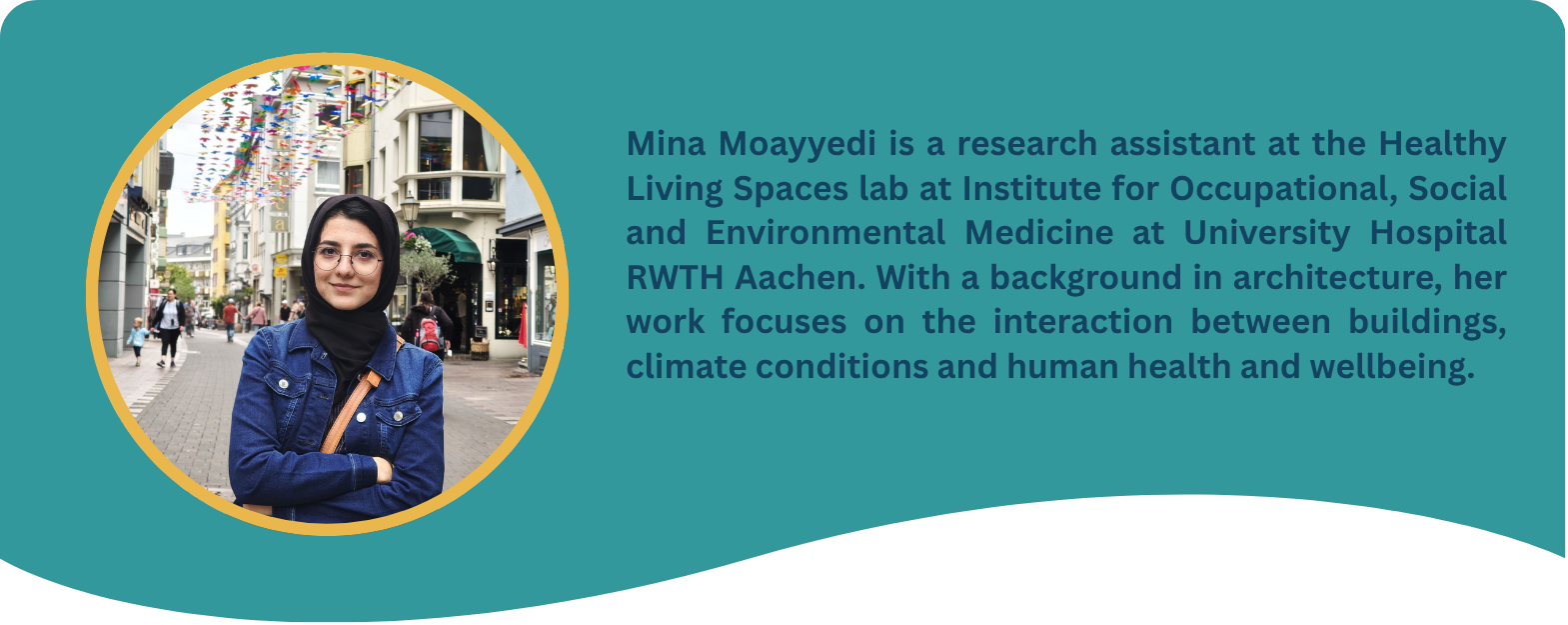
Can you share one concrete example of a design or retrofit choice that looks “fine” from a technical standpoint, but changes when you look through a health & well-being lens? What would you do differently, and why?
Mina Moayyedi:
A typical example is the extensive use of glazing for daylight and energy performance. From a technical perspective, it often meets efficiency and lighting targets. However, when viewed through health and well-being lens, large glass surfaces can create glare, overheating during heatwaves, eye strain and reduced privacy. In line with our design practice, we would recommend combining glazing with appropriate shading and natural ventilation strategies to ensure comfort, reduce health risks and create more adaptable spaces.
If a building owner, architect, or local authority wanted to start using D5 tomorrow, what are three simple entry points you would recommend—depending on whether they are at the planning, design, or operation stage?
Mina Moayyedi:
Our design practice can be used at any project stage: At the planning stage, we recommend a short co-creation workshop with stakeholders to identify key health and well-being metrics related to occupants’ needs. At the design stage, we make use of our human-centred checklists to ensure physical, mental and social aspects are explicitly addressed alongside technical requirements. And finally, at the operation stage, we focus on the introduction of simple occupant feedback surveys and basic monitoring of comfort and well-being indicators to understand real performance and guide small improvements.
Fast-forward: how would you know that your design practice is making a real difference? What would be the clearest signs—felt by occupants or communities—that a “human-centred” approach is working?
Mina Moayyedi:
We would recognize the positive impact of the design practice when occupants report feeling healthier, more comfortable and more adaptable in their buildings. Clear signs include improved physical well-being (better thermal comfort, less fatigue, more opportunities for activity), enhanced mental well-being (improved mood, reduced stress, greater access to natural light and views), and stronger social well-being (more informal interactions, greater sense of inclusion and reduced loneliness). These human-centred outcomes, felt directly by people, would be the strongest evidence that our design approach is working.
What do you hope will change in the way we plan and retrofit buildings if approaches like your design practice become mainstream? Who benefits most and who is currently being overlooked?
Mina Moayyedi:
If human-centred approaches like ours become mainstream, we hope the planning and retrofitting of buildings will balance technical and architectural goals with explicit support for human health and well-being in the context of climate change. This means redefining existing tools and guidelines, so they better address both building resilience and human health and resilience. The greatest benefit will be felt by those currently most overlooked, including older adults, children, people with health sensitivities and lower-income communities, who are often most affected by heat, poor indoor conditions and social isolation. Finally, better-designed buildings will improve quality of life for everyone while helping people become more resilient to climate challenges.
Thank you for the interview, Mina !
Read more about the results of the design practice here & have a look at our other project results.
This interview was conducted by Lucia Hörner, Project Manager at Steinbeis Europa Zentrum, and Elina Schock, Project Consultant at Steinbeis Europa Zentrum. Steinbeis Europa Zentrum is responsible for dissemination, communication and exploitation activities in MULTICLIMACT.
Picture copyright: Mina Moayyedi, Universitätsklinikum Aachen
About MULTICLIMACT:
MULTICLIMACT is an EU-funded project aimed at safeguarding Europe’s built environment against the increasing threats of natural and climatic hazards. By uniting 25 leading European organisations, MULTICLIMACT aims to enhance resilience, sustainability, and safety for communities across the continent. Through innovative strategies, including a toolkit of 20 reliable methods and digital solutions, the project targets the urgent need for adaptive measures against floods, earthquakes, extreme weather conditions and heatwaves. Tested across four pilot sites with diverse climatic conditions, MULTICLIMACT embodies a shared vision for a safer, more resilient future, focusing on actions to reduce the impact of climate change on the built environment. For more information, please visit www.multiclimact.eu.


MULTICLIMACT is a Horizon Europe project supported by the European Commission under grant agreement No 101123538. Views and opinions expressed are however those of the author(s) only and do not necessarily reflect those of the European Union. Neither the European Union nor the granting authority can be held responsible for them.
© 2026 MULTICLIMACT Consortium Partners. All rights reserved.